
 GhLinks Media
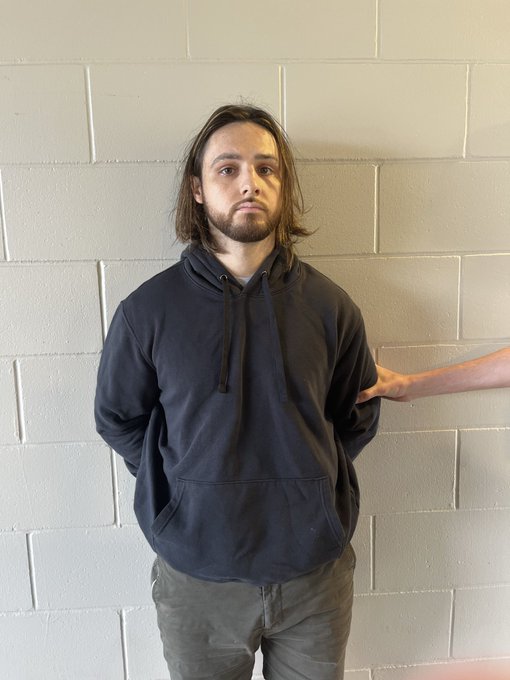
A 29-year-old Uber driver has been arrested in connection to the Palisades Fires that decimated Los Angeles and destroyed dozens of celebrity mansions in January.
Jonathan Rinderknecht was charged with ‘maliciously’ starting the catastrophic fire, according to Acting US Attorney Bill Essayli.
‘The complaint alleges that Rinderknecht’s started a fire in Pacific Palisades on New Year’s Day — a blaze that eventually turned into one of the most destructive fires in Los Angeles history, causing death and widespread destruction,’ Essayli said.
‘Among the evidence that was collected from his digital devices was an image he generated on ChatGPT depicting a burning city.’
Rinderknecht was arrested on Florida, according to officials. His first court appearance is scheduled for today at 1.30pm in Orlando.
He was charged with destruction of property by means of fire – a felony that carries a mandatory minimum five-year prison sentence and is punishable by up to 20 years.
The fire that erupted on January 7 killed 12 people and destroyed more than 6,000 homes and buildings in the Pacific Palisades, a wealthy coastal neighborhood of LA.
A-listers such as Paris Hilton, Tom Hanks and Mandy Moore lost their mansions in the fires.
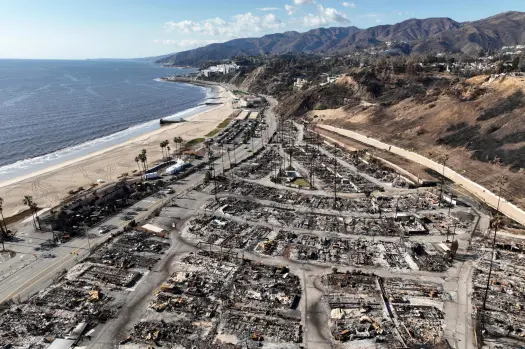
Investigators still haven’t determined the cause of that blaze or the Eaton Fire, which broke out the same day in the community of Altadena and killed 18 people.
Both fires burned for days, reducing entire neighborhoods to rubble and ash.
An outside review released in September found that a lack of resources and outdated policies for sending emergency alerts led to delayed evacuation warnings.
The report commissioned by Los Angeles County supervisors said a series of weaknesses, including ‘outdated policies, inconsistent practices and communications vulnerabilities,’ hampered the county’s response.
The Associated Press found that the first evacuation order covering neighborhoods closest to the start of the devastating Pacific Palisades wildfire didn’t come until about 40 minutes after some of those homes were already burning.
The wildfire, the most destructive in California history, had spread rapidly in ornamental plantings and burning homes by 11:27am on January 7, recordings of scanner traffic reveal.
So many people fled on their own, as wind-whipped flames raced over the nearby hills, that by the time officials issued the order to evacuate at 12:07pm, traffic was gridlocked.
Authorities eventually urged people to exit their cars and leave on foot, and then used a bulldozer to clear away abandoned vehicles and make way for fire crews.
Despite the timing of the order, nearly all the residents of Pacific Palisades made it to safety — a relief that some attributed to the hyper-awareness of fire danger in a region frequently scarred by it, the efforts of first responders, the initiative that many took to evacuate on their own, and the fact that the fire broke out in broad daylight, when those nearby were awake to notice it.
The time lag is one of several issues that may have complicated the fire response. With the severe winds preventing aerial firefighting, water hydrants ran dry amid unprecedented demand.
A reservoir near Pacific Palisades was empty because it needed repairs. Top Los Angeles Fire Department commanders decided not to deploy roughly 1,000 available firefighters and dozens of water-carrying engines in advance, the Los Angeles Times reported.